SolarEnergies.ca has published a new consumer guide explaining renewable energy certificates, or RECs, after a federal clean-electricity update showed how certificate accounting can change the way renewable electricity progress is reported in Canada.
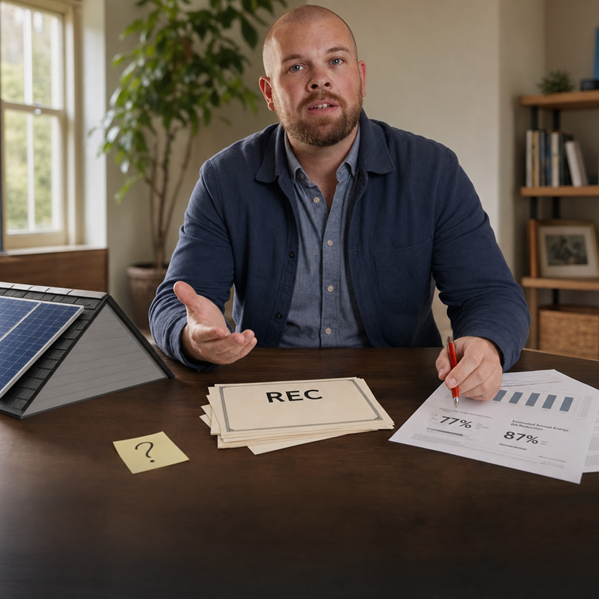
The guide, titled "Renewable Energy Certificates in Canada: Real Clean Power or Paper Solar?", follows the Government of Canada's May 27, 2026 clean electricity procurement update. According to Canada.ca, the federal government consumed 2,610 gigawatt-hours of electricity in 2023-24 and purchased 227 gigawatt-hours of RECs to compensate for electricity used in emissions-intensive grids. With REC purchases included, 87% of federal electricity consumption counted as non-emitting. Without the impact of RECs, the figure was 77%.
SolarEnergies.ca says that 10-point gap is useful because it shows why RECs matter, but also why homeowners and small businesses need clearer language around clean electricity claims.
"A REC is not fake solar, but it is also not the same thing as panels producing power on a roof," Vitaliy Lano, owner of SolarEnergies.ca, stated. "The honest question is who owns the clean electricity claim. Once that is clear, the rest of the conversation becomes much less confusing."
The new guide explains that one REC certifies ownership of the renewable electricity attributes associated with 1 megawatt-hour of renewable electricity generation, including the related emissions-reduction claim. It also explains the difference between physical electricity, renewable electricity attributes, and carbon offsets. RECs are used for electricity claims measured in megawatt-hours, while carbon offsets are measured in tonnes of CO2e reduced or removed.
The distinction matters for consumers because a claim such as "100% renewable electricity" can refer to on-site solar generation, bundled clean power, or unbundled RECs bought separately from the electricity itself. SolarEnergies.ca warns that these claims can be legitimate when they are tracked and retired properly, but weak or confusing when they are sold as proof that solar power is physically flowing into a building.
Lano commented that the purpose of the guide is to help readers separate a useful clean-electricity accounting tool from a loose marketing promise.
"Good renewable energy claims should be plain enough for a homeowner to explain at the kitchen table," Lano said. "If the claim needs too much fine print, that is a sign to ask better questions before paying extra or signing away the environmental attribute from a solar system."
The guide also looks at how the federal government is using more than one clean-electricity tool. Public Services and Procurement Canada's clean electricity initiative includes regional procurement in Alberta, Saskatchewan, New Brunswick, and Nova Scotia, along with a national REC strategy. Canada.ca also states that PSPC is working to purchase the equivalent of 128,000 megawatt-hours of RECs where new clean renewable sources are not yet available.
SolarEnergies.ca highlights one federal solar example from 2023: a $4-million contract with a joint venture between South Head Energy and Switch Power for 6,400 RECs annually from a new solar farm over 20 years. The article presents this as a stronger REC story because it is tied to a named Canadian solar project, a long-term supply structure, and Indigenous business participation.
For homeowners, the guide says RECs usually come after the main solar decision. Roof fit, shading, installed cost, utility rules, system size, warranties, financing, and expected bill savings remain the core issues. If a home solar system creates an environmental attribute, the homeowner should know whether that claim stays with the homeowner or is sold or assigned to someone else.
"For many families, rooftop solar is easier to understand because the panels are visible and the bill impact is direct," Lano added. "RECs can still have a role, especially for larger buyers or electricity use that cannot be covered on site, but they should be explained honestly."
The publication says the same logic applies to small businesses. Before buying certificates or making public clean-power claims, businesses should ask whether the RECs are retired in their name, whether the certificates are Canadian or local, whether they come from newer projects, whether the power is bundled with the attribute, and whether proof of retirement is available.
SolarEnergies.ca, the publication behind Canada Goes Solar, publishes practical solar energy guides for Canadian homeowners and businesses. Its coverage focuses on installation quality, long-term savings, incentive programs, financing, utility rules, and clear comparisons between solar options. The new REC guide is intended to help readers understand clean-electricity claims before comparing green electricity plans, rooftop solar quotes, or business sustainability statements.
###
For more information about Solar Energies In Canada SEIC, contact the company here:
Solar Energies In Canada SEIC
Vitaliy Lano
2368680609
admin@solarenergies.ca